

Late spring bouquets can be shockingly stunning without being overly complicated. In this post, I’m sharing one of my favorite uncomplicated bouquet combos, why these four flowers work so well together, and how understanding bloom timing can make creating beautiful, seasonal bouquets feel surprisingly simple.

Every year, flower farmers talk about the “late spring/early summer lull.” It’s that awkward stretch after spring bulbs like tulips have finished blooming, but before summer annuals really hit their stride.
It can feel like one of the trickiest times of year to create bouquets and arrangements.
The good news? It totally doesn’t have to be.
One of the biggest lessons I’ve learned over the years is that creating beautiful late spring bouquets has far less to do with complicated bouquet recipes and far more to do with understanding bloom timing. Once you know which flowers naturally overlap, bouquet building becomes much simpler.
The four flowers I’m sharing today are some of my favorite ingredients for this time of year because they can typically be timed to bloom together. Depending on your unique geographical location, they may bloom earlier or later in the spring, but the goal is the same. Time these crops to flower together, and you’ll have everything you need to create stunning bouquets without an overly complicated crop plan.
In this post, we’ll cover:
- Why these four flowers work so well together
- When to plant each flower for late spring bouquets
- How to create beautiful bouquets without complicated recipes
- Why a cohesive color palette matters more than lots of ingredients
- How I let the garden guide my bouquets instead of forcing every arrangement to look the same
One of the biggest misconceptions I had when I first started flower farming was believing every bouquet needed every design element. I thought I needed focal flowers, foliage, filler, spikes, discs, airy elements, and everything in between.
But that’s simply not true!
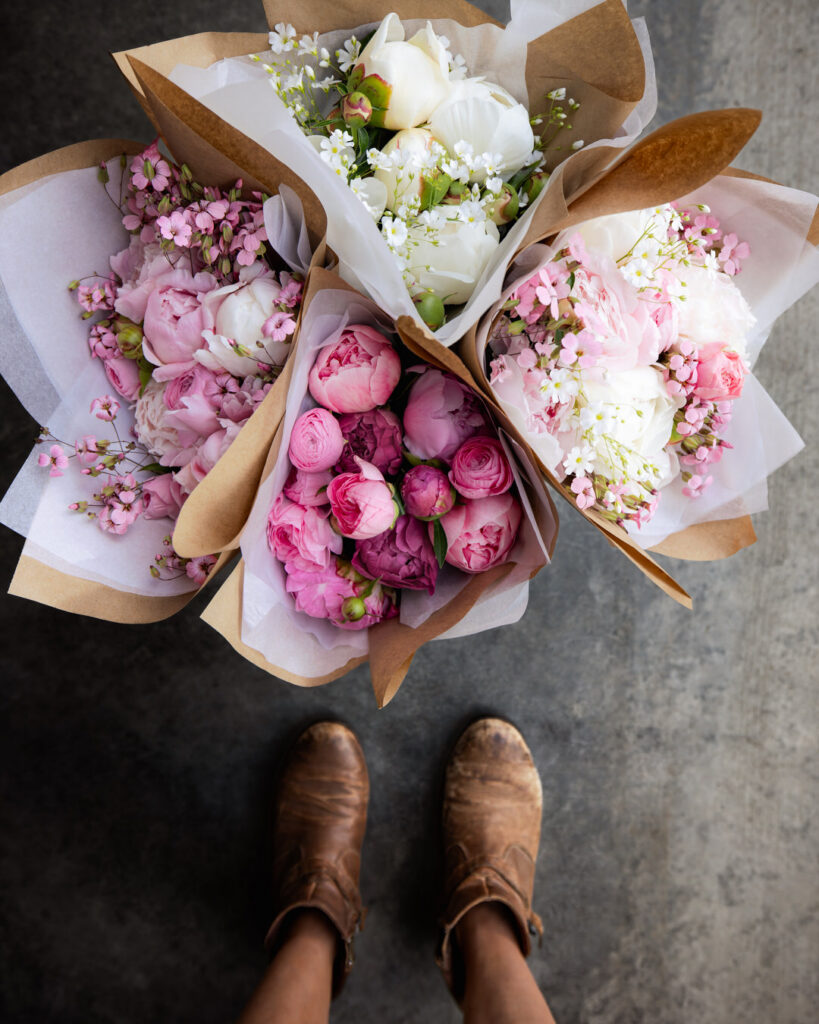
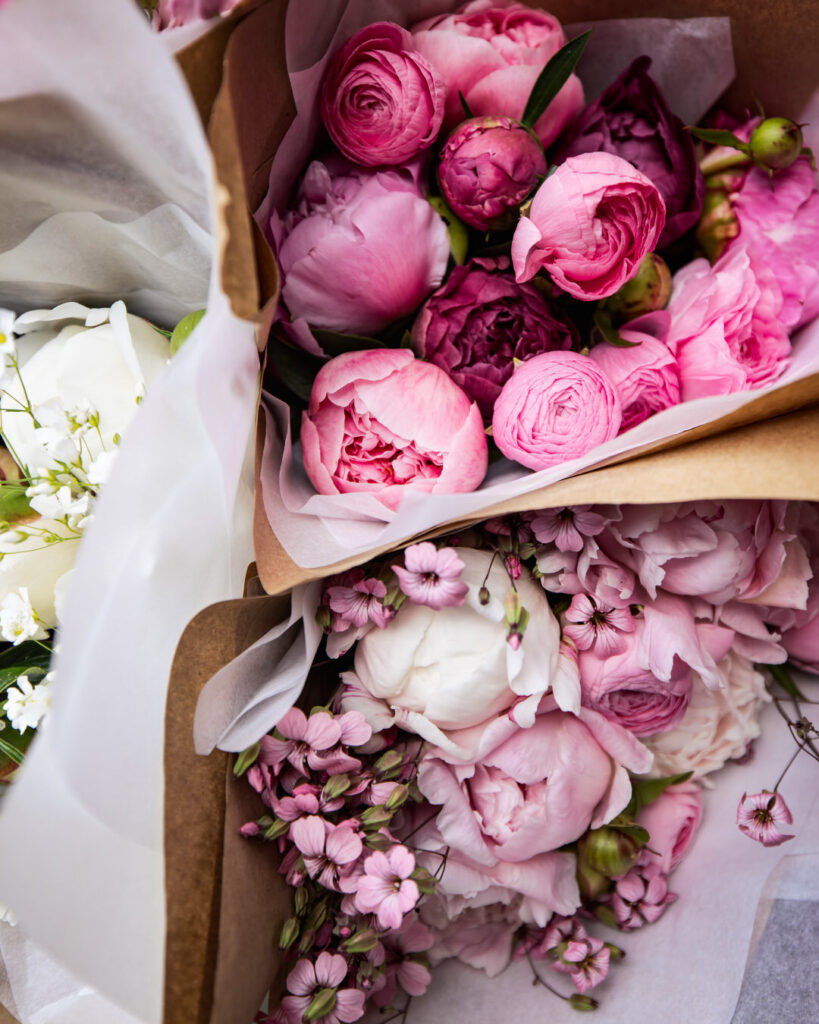
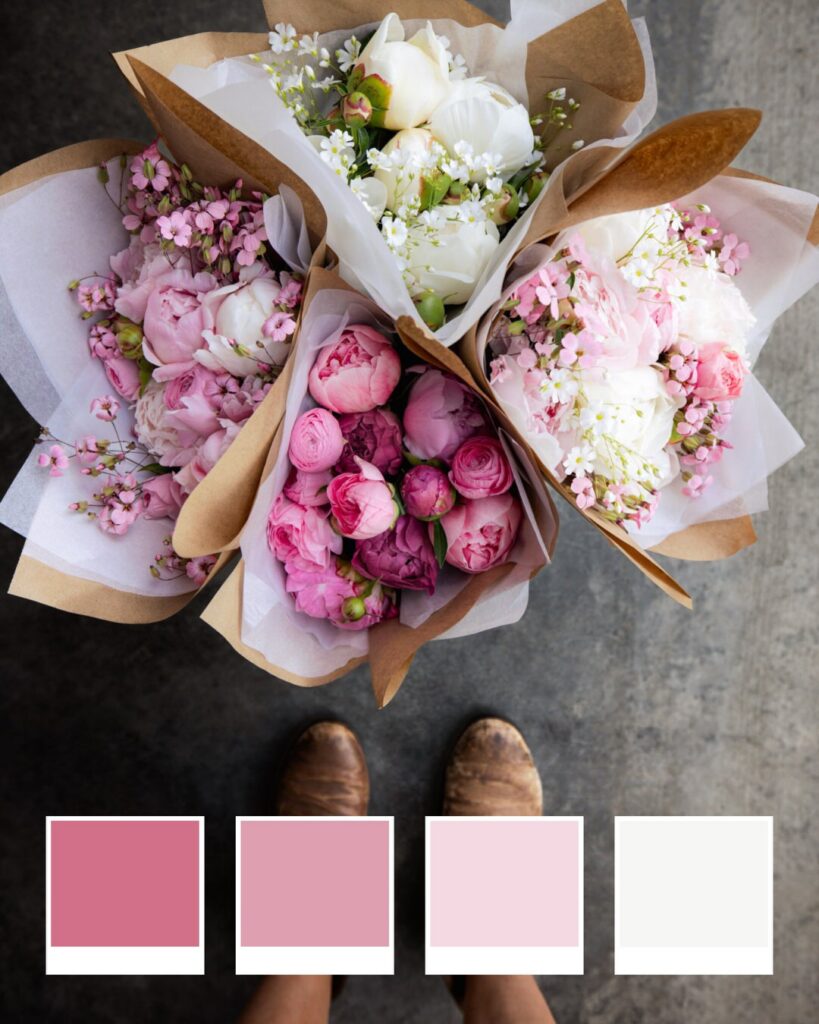
If you look at the bouquets in the first photo above, you’ll notice they’re all built from the same four flowers, and not one of them is exactly alike.
Some contain all four ingredients. Others contain only two or three. Yet together they still feel abundant, intentional, and can I just say . . . beautiful? I mean, here is the response I got from this order:

Let’s dive into why.
Why These Four Flowers Work Together
Before we talk about each flower individually, here’s the real secret:
These flowers naturally bloom around the same time.
Rather than trying to force flowers from different seasons together, I prefer building bouquets around what the garden is already offering organically. That’s exactly what’s happening here.
Because these flowers overlap naturally, they create one of my favorite late spring bouquet combinations.
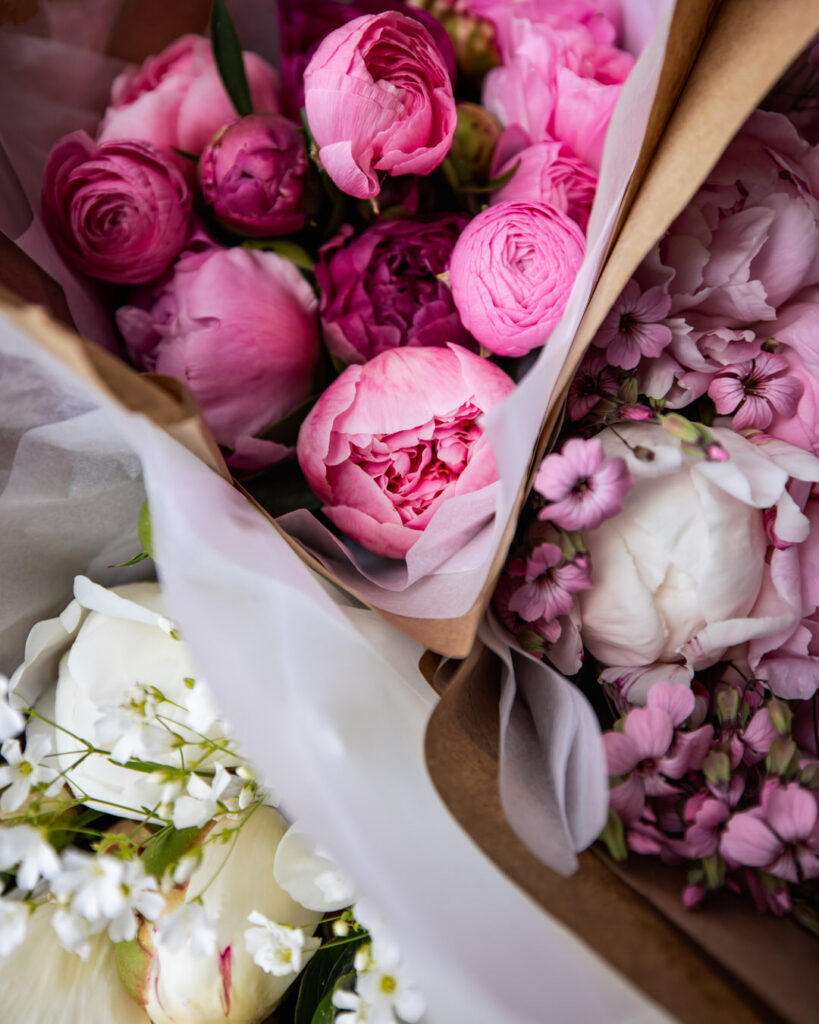
But it’s not just the timing! The different flower sizes and textures add interest, but with so few ingredients, it’s the color palette that really brings it together. If you’ve ever wanted to understand why some bouquets just feel right, this is one of the biggest reasons. We’ll dive deeper on this at the end.


Late Spring Bouquets: At a Glance
| FLOWER | ROLE | PLANTING TIME | HARVEST WINDOW | BEGINNER FRIENDLY |
|---|---|---|---|---|
| Peony | Focal flower | Fall (spring also possible) | Spring (mid-May to mid-June in Zone 4 Wisconsin) | ✓ |
| Ranunculus | Secondary focal | Fall or early winter/spring (depending on zone) | Spring (May to mid-June in Zone 4 Wisconsin) | Intermediate |
| Gypsophila (Gypsophila elegans) | Airy filler | Winter or early spring direct sow | Spring (late May to early June in Zone 4 Wisconsin) | ✓ |
| Saponaria (Gypsophila vaccaria) | Airy filler | Winter or early spring direct sow | Spring (late May to early June in Zone 4 Wisconsin) | ✓ |
Late Spring Bouquets: The Four Flowers
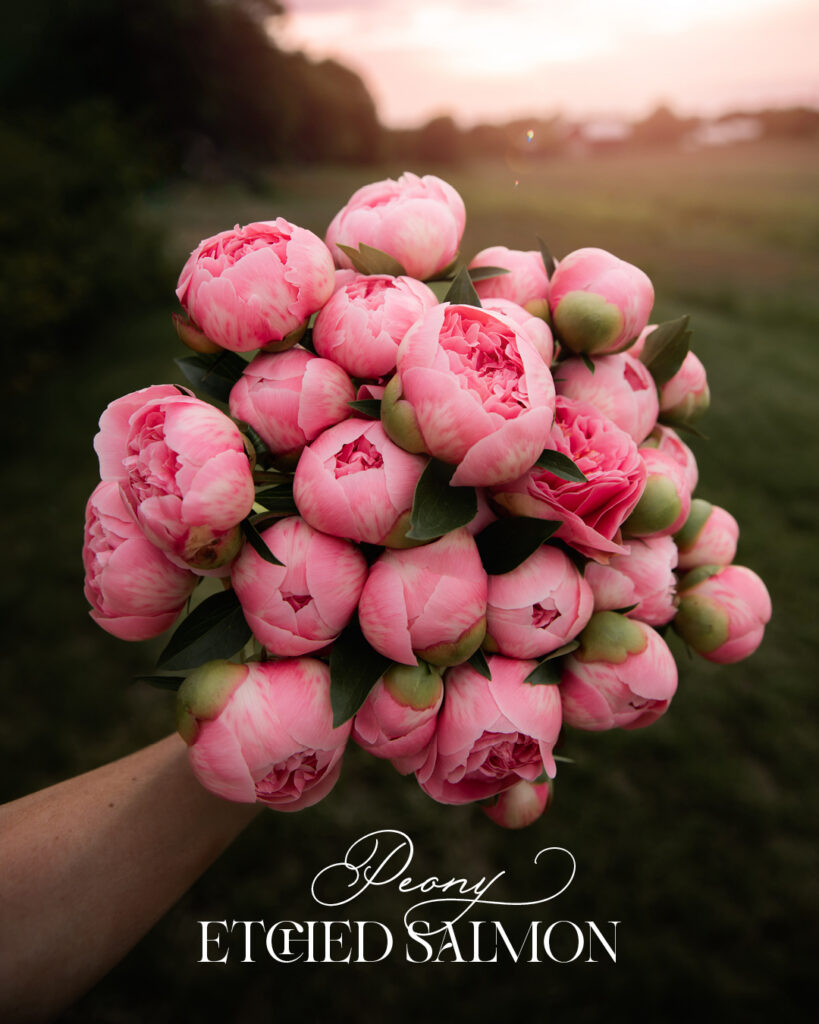
Peonies
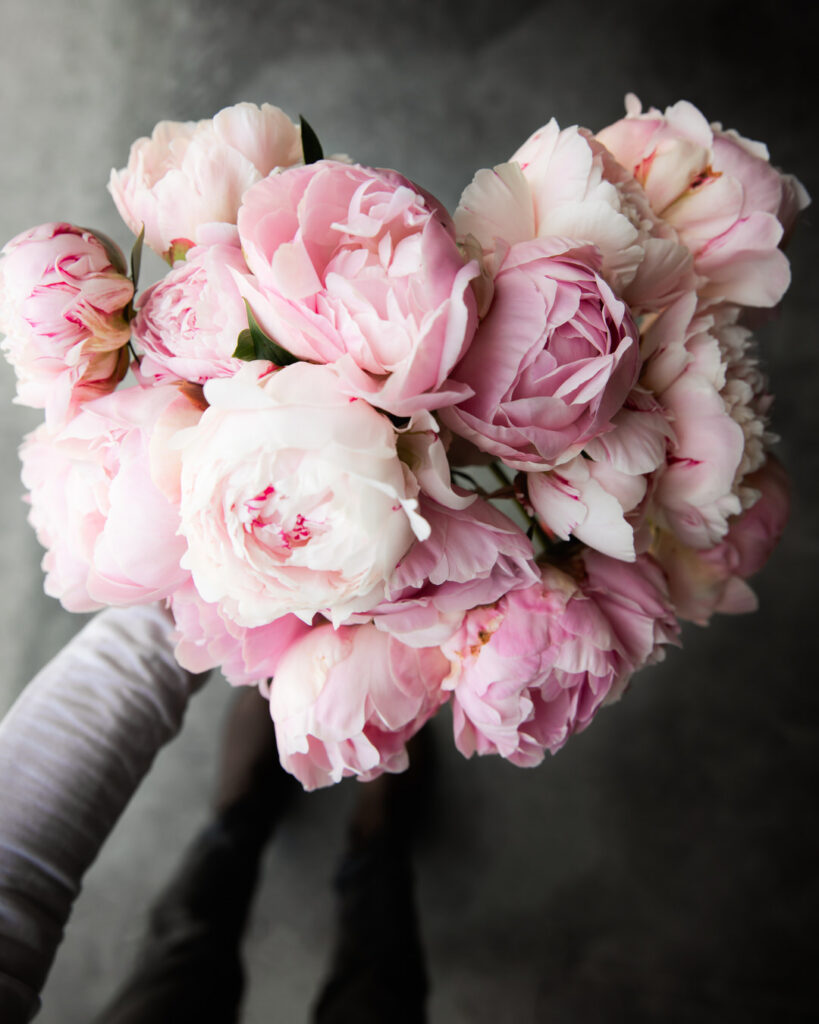
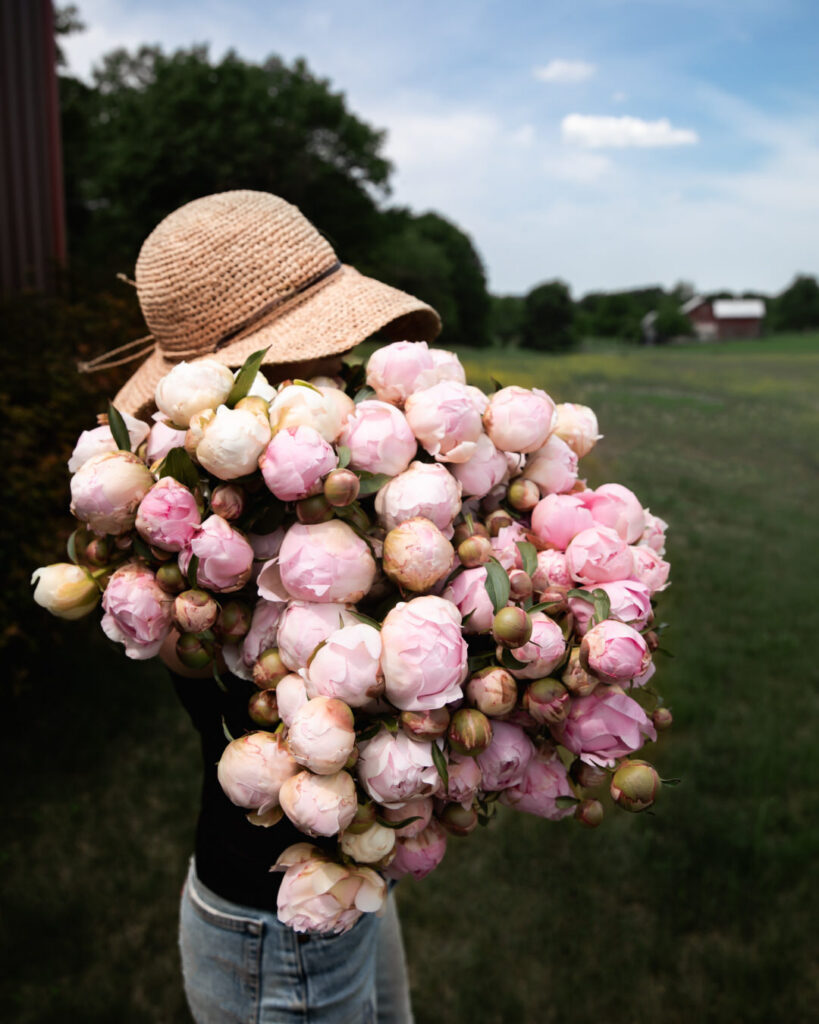
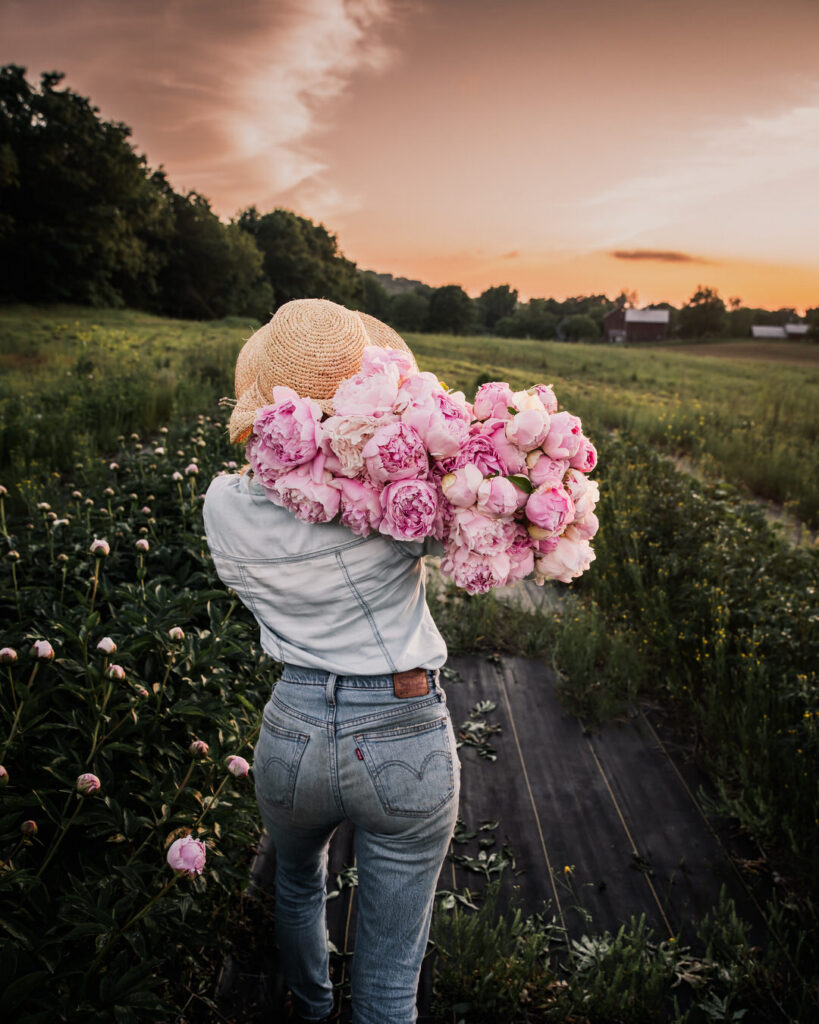
Peonies are the focal flower of this bouquet, and I’d rank them as the most important ingredient. You’ll notice they’re the only flower that appears in every bouquet. In fact, if you really want to keep things simple, a straight bunch of peonies makes an incredible bouquet in late spring.
Peonies are hands down one of my favorite crops. They have incredible customer appeal, many varieties are fragrant, and they evoke so many memories for people. From a flower farm perspective, they’re also an exceptional investment. You plant them once, they produce for years, they store dry in a cooler for weeks, florists are constantly looking for quality stems, and they’re one of my favorite premium crops.
(If you haven’t seen it already, check out my Insta post here on these wholesale prices during Mother’s Day.)
Peonies are typically planted as bare roots in the fall or early winter, although spring planting is possible. Plants can take up to three years to establish before harvesting, though I know folks report harvesting year one with no adverse affects. On our farm, we disbud and allow plants to establish for two full years before taking our first harvest (even when planting bare roots with multiple eyes).
Bloom time varies by location, but in the United States they’re generally considered a spring flower, blooming April through June. Here in Zone 4 Wisconsin, ours bloom from mid-May through mid-June. By choosing early, mid, and late season cultivars, you can naturally extend your harvest window. And because they store dry in the cooler for weeks, timing them with the other ingredients becomes even easier.
For a deeper dive, check out our Peony Plant Profile.
And remember, we always share a portion of our bare roots each year during our bulb launch, and members receive 20% off!
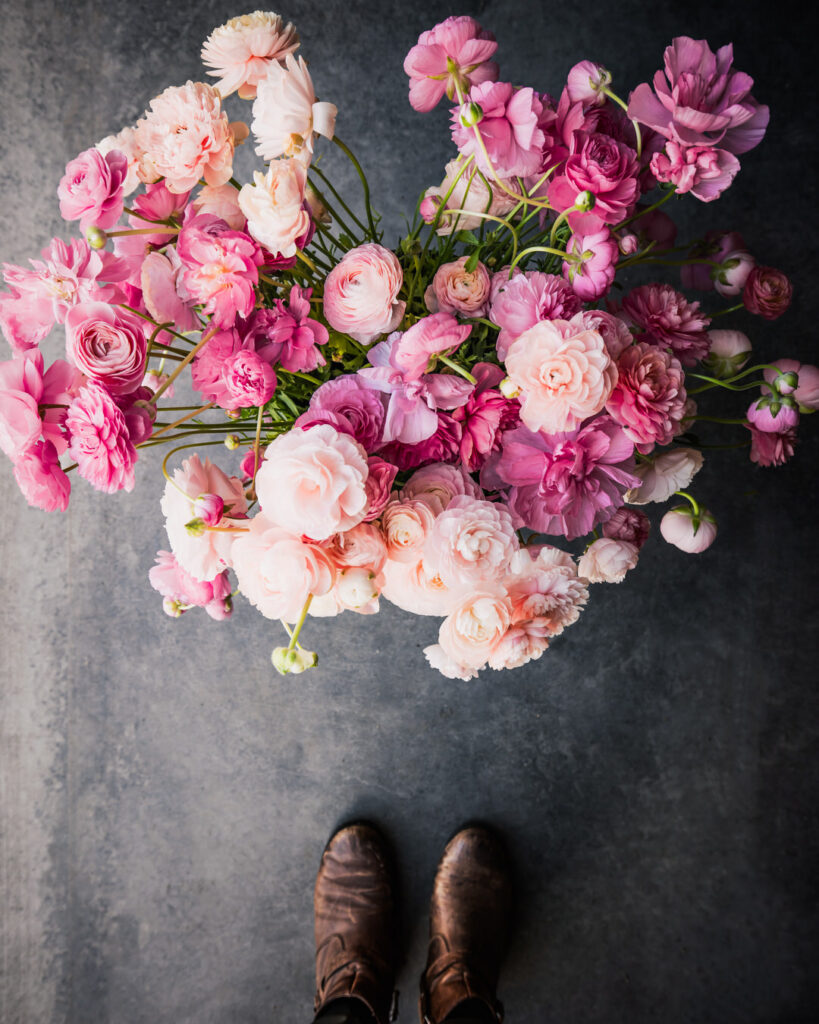
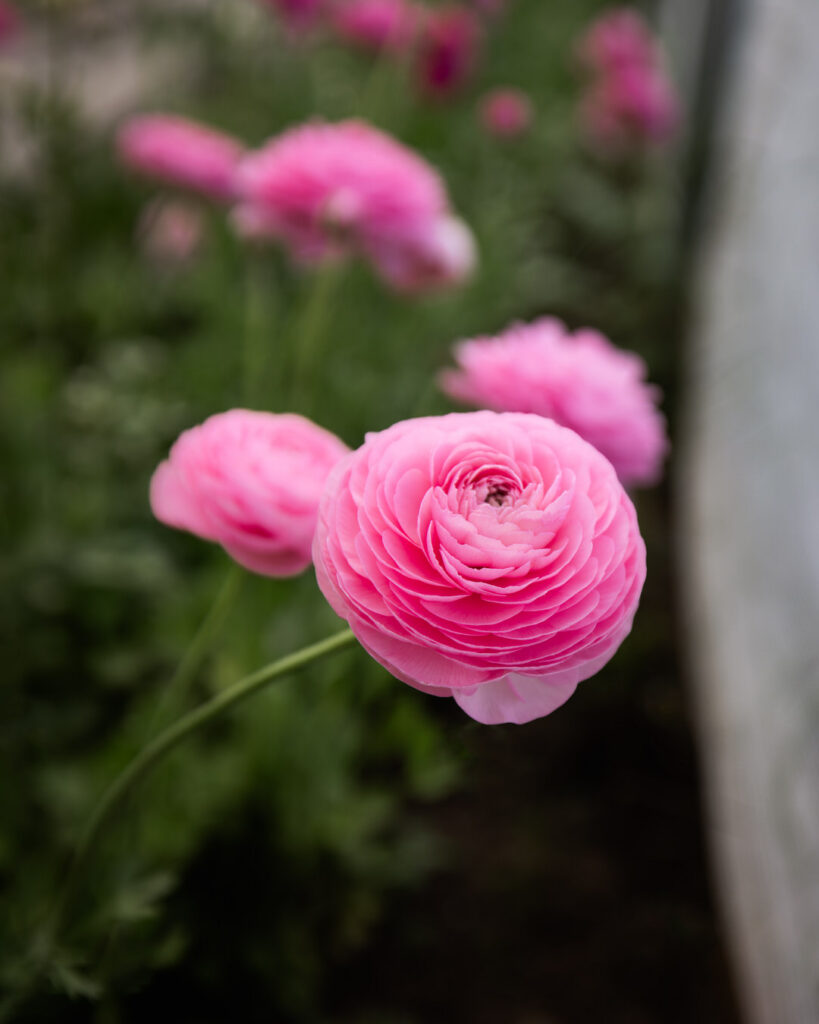
Ranunculus
If peonies are my must-grow perennial, ranunculus are my favorite spring extra juicy goodness.
I usually describe ranunculus as an intermediate crop rather than a beginner crop. They’re absolutely worth growing, but they require a little more than some of the other flowers in this bouquet.
In our climate, spring-planted ranunculus typically begin blooming just ahead of peonies, but because they store beautifully and have an exceptional vase life, they’re easy to carry into these bouquets.
At the time of this order, I was actually hoarding most of my Rosa Chiaro ranunculus for June weddings . . . but I simply couldn’t resist adding a few. I had them tucked away in the cooler already, and they just looked SO GOOD!
On our farm, we plant the majority of our crop in the spring, with harvest running from May through mid-June.
For a deeper dive, be sure to check out our Ranunculus Plant Profile. Just like bare roots, we share a portion of our corms every year, and once again, you get 20% off!
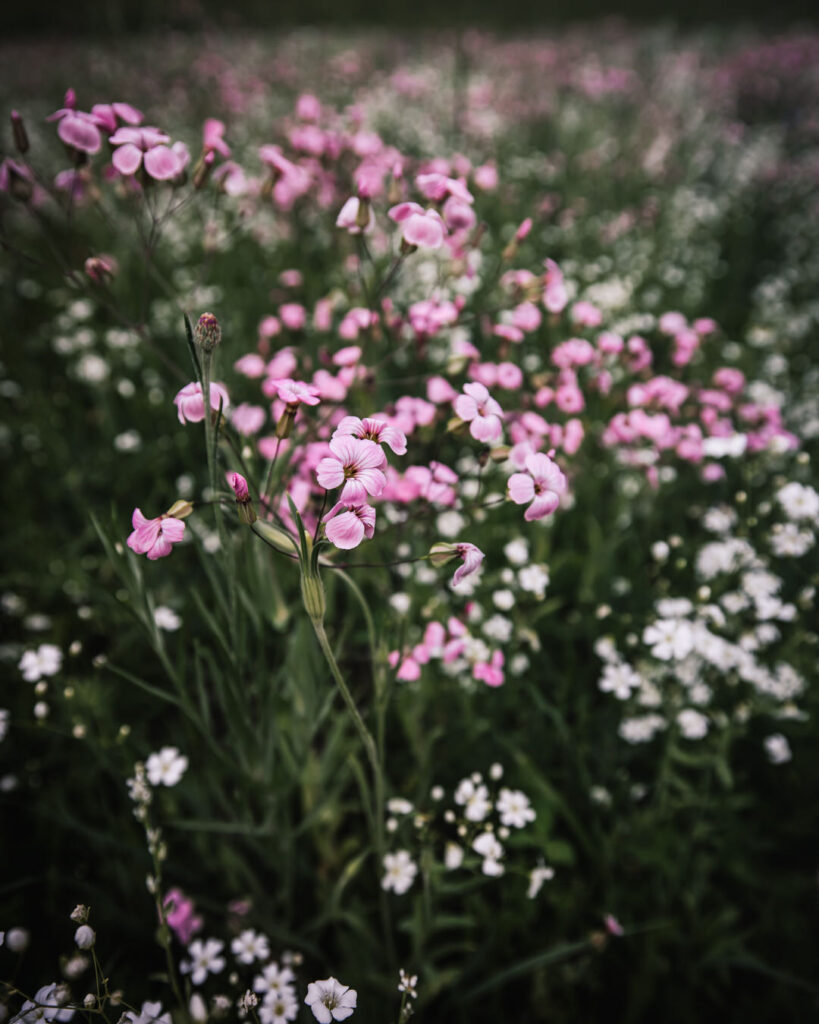
Gypsophila & Saponaria
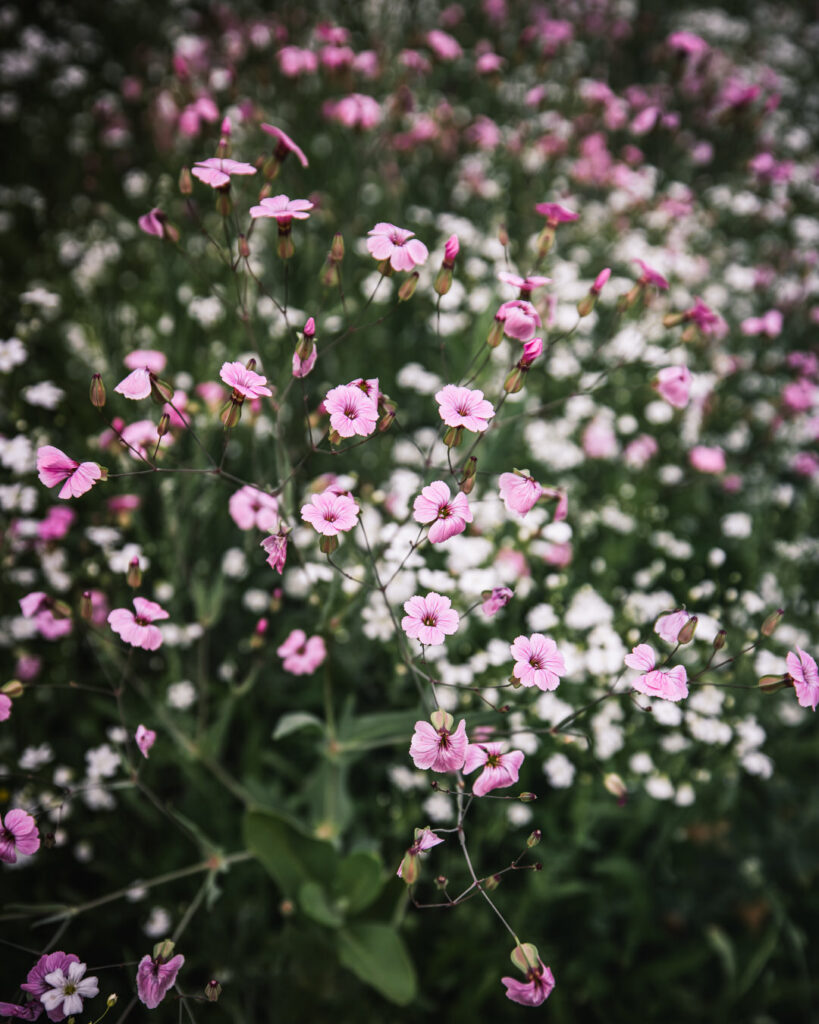
I’m going to discuss these two together because they’re closely related and play very similar roles in bouquets. When I refer to Gypsophila, I’m talking about Gypsophila elegans ‘Covent Garden Market’ (the tiny white flowers). When I refer to Saponaria, I’m talking about Gypsophila vaccaria ‘Pink Beauty’ (the tiny pink flowers), also known as Soapwort.
And both are incredibly easy to grow!
While they can technically be transplanted, the preferred method is direct sowing. For these bouquets, both Gyp and Saponaria were winter sown in December and harvested the first week of June.
Saponaria generally prefers cooler weather, while Gyp tends to tolerate warmer spring conditions a little better. Both can be succession sown every couple of weeks for a continuous harvest.
If you’re only trying one, I’d probably recommend Gyp if your springs warm up quickly. Otherwise, I personally reach for Saponaria more often because I find it a bit sturdier and fuller.
The good news is that seed for both is inexpensive, so I say: why not grow both?
If you need large quantities, be sure to check with your wholesaler. If you’re looking to try your hand and/or only need smaller quantities, we have both available here and yup, you guessed it: you get 20% off!!

One of My Favorite Bouquet Lessons
One of my favorite things about these bouquets is that none of them are exactly alike.
In fact:
- One bouquet contains all four flowers
- One contains peonies, ranunculus, and saponaria
- One contains only peonies and ranunculus
- One contains only peonies and gyp
Years ago, that would have stressed me out.
I thought every bouquet needed to follow the exact same recipe in order to be an efficient farmer. Or that I had to create a consistent product to be considered a professional (or like a generally responsible adult who had her life together). The result? I spent way too much time worrying that I had enough of every ingredient to make every bouquet identical.
Now?
I let the season, colors, and my own intuition guide me. Basically, I simply use what’s available and looks the best at the time of the order. I mix and match and let the colors and forms tell their unique story. Ironically, that’s become one of the things customers tell me they love most. That every bouquet is totally unique! These are my people! I think it’s the curiosity that bring us all back for more.

Why This Color Palette Works
Timing and seasonality is only half of the equation. The other reason these bouquets work so well is their color palette.
We’re essentially working with a monochromatic blend of different shades of pink, blush, and white. Because the colors are closely related, the bouquets feel calm and cohesive, and the different bloom shapes and sizes keep it interesting. I love color theory, and a monochromatic palette is just one way to work with color (though one I adore), but there are many options and combos depending on you’re trying to evoke.
If you ever want to study your own bouquets, one fun exercise is to upload a photo into Canva and use the eyedropper tool to sample the colors. It’s a great way to train your eye to recognize palettes that naturally work well together.
Final Thoughts
If there’s one thing I hope you take away from this post, it’s that beautiful bouquets can be surprisingly simple once we understand what blooms together. If you planted just these four flowers, you’re well on your way to gorgeous late spring bouquets. From there, you can always plant more, haha 🙂


cLICK FOR Comments +